फिल्म रिभ्यूFilm Reviews · नेपालीNepali
'एलिफेन्ट्स इन द फग' रिभ्यु: कान्सको ताली नेपाली हलमा पनि गुन्जियो'Elephants in the Fog' Review: Cannes' Applause Echoes in Nepali Theatres Too
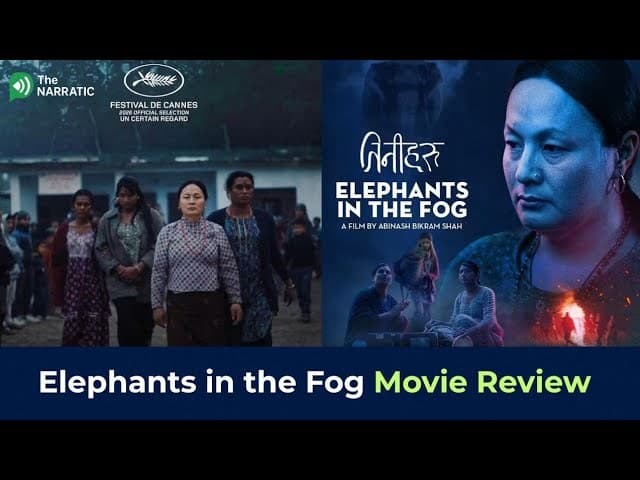
कान्स फिल्म फेस्टिभलमा ८ मिनेटसम्म स्ट्यान्डिङ ओभेसन पाएको नेपाली सिनेमा 'Elephants in the Fog' (तिनीहरू) हेरिसकेपछि त्यो ताली किन त्यसै बजेको रहेनछ भन्ने कुरा स्पष्ट हुन्छ। सोही फेस्टिभलको 'अन सर्टेन रिगार्ड' सेक्सनमा जुरी प्राइज जितेर इतिहास रचेको यो फिल्मको लेखन तथा निर्देशन अविनाश विक्रम शाहको हो।
यो फिल्मले कान्समा मात्र होइन, नेपालमा रिलिजअघि भएको प्रिमियरमा समेत ५ मिनेट स्ट्यान्डिङ ओभेसन पाएको थियो। विश्वका विभिन्न फेस्टिभलमा प्रशंसा पाए पनि नेपाली दर्शक र धेरै नेपाली फिल्ममेकरको साथ पाउन नसकेका फिल्महरू धेरै छन्। त्यस्तो परिवेशमा यो फिल्मले ठूलो आशा जगाएको छ। फर्स्ट डे फर्स्ट सोमा फिल्म हेर्दा पनि त्यो महसुस भयो। फिल्मको अन्त्यमा बज्ने ताली सिनेमाभित्रको पात्रबाट मात्र होइन, हलमा बसेका दर्शकबाट पनि बज्न थाल्छ।
कथा
फिल्मको कथा एउटा सानो गाउँको वरिपरि घुम्छ। गाउँको छेउमै ठूलो जंगल छ, जहाँ जंगली हात्तीको त्रास जंगलभन्दा पनि ठूलो छ। यही गाउँमा बस्ने किन्नर समुदायकी पात्र पिरती भित्रभित्रै एउटा सामान्य र शान्त जीवनको सपना बोकेकी छिन्। छोरी अप्सरा अचानक बेपत्ता भएपछि उनले आफ्नो व्यक्तिगत चाहना र किन्नर समुदायप्रतिको जिम्मेवारी, यी दुईमध्ये एउटा छनोट गर्नुपर्ने अवस्थामा पुग्छिन्। त्यसपछि उनले के गर्छिन् भन्ने कुराको वरिपरि फिल्म घुम्छ।
अभिनय
पिरतीको भूमिकामा पुष्पा थिङ लामाले किन्नर समुदायको आश्रयस्थल सम्हाल्ने आमाको भूमिका निभाएकी छिन्। एकातिर समुदायप्रतिको जिम्मेवारी र छोरी हराएपछिको दबाब छ, अर्कोतिर प्रेमीसँग भागेर साधारण जीवन सुरु गर्ने चाहना। यी दुई विपरीत परिस्थितिबीचको इमोसनल कन्फ्लिक्ट उनले अनुहारको भाव र आँखाबाटै देखाएकी छन्। बलिउडका दिग्गज निर्देशक अनुराग कश्यपले उनको अभिनयको तारिफ गर्नु अनौठो होइन रहेछ।
अप्सराको भूमिकामा अलिज घिमिरेले समाजमा आफ्नो अस्तित्व खोज्दै भौंतारिएकी पात्र निभाएका छन्। सफारी चालकसँगको निकटता र त्यसले ल्याएको जटिलतालाई उनले राम्ररी प्रस्तुत गरेका छन्। उनको अभिनयले समुदायको युवा पुस्ताको पीडा र सपनालाई प्रतिनिधित्व गर्छ।
स्थानीय ड्रम मास्टरको भूमिकामा आशान्त शर्मा पिरतीका प्रेमीका रूपमा देखिन्छन्। एक हुन निकै गाह्रो प्रेमलाई उनी र पुष्पाबीचको अन-स्क्रिन केमेस्ट्रीले सुन्दर ढंगले उतारेको छ। फिल्ममा दुईबीचको एउटा इन्टिमेट सिन छ, जुन साँच्चै रियल जस्तो लाग्छ। सायद कुनै नेपाली सिनेमाले यति रियालिज्मका साथ यस्तो सिनलाई न्याय गरेको यो पहिलो पटक हो। यी बाहेक दीपिका यादव, जस्मिन विश्वकर्मा, गौरी मल्ल, माओत्से गुरुङ र आकांक्षा कार्कीको काम पनि उत्तिकै उल्लेखनीय छ।
निर्देशन
आफ्नो पहिलो फिचर फिल्मबाटै अविनाश विक्रम शाहले आफूलाई परिपक्व फिल्ममेकरका रूपमा चिनाएका छन्। फिल्मका कुनै पनि दृश्य जबरजस्ती राखिएजस्तो लाग्दैन। यस्तो सिनले फिल्म चल्छ, दर्शकले यस्तै हेर्न रुचाउँछन् भन्ने व्यावसायिक मसलाबाट टाढा रहेर उनले यथार्थ कथा भन्ने साहस गरेका छन्, र यही उनको सबैभन्दा ठूलो सफलता हो।
निर्देशनको सबैभन्दा सशक्त पक्ष 'हातको ताली' को प्रयोग हो। दक्षिण एसियामा ट्रान्स महिलालाई जिस्क्याउन धेरैजसो ताली प्रयोग गरिन्छ, तर अविनाशले त्यही तालीलाई फिल्ममा शक्तिशाली माध्यम बनाएका छन्। पात्रहरूले यसलाई कहिले खुसी, कहिले आक्रोश, कहिले जंगली हात्ती धपाउने हतियारका रूपमा प्रयोग गर्छन्। फिल्म सकिएपछि दर्शकका हात पनि आफैँ बज्न थाल्छन्। नेपाली सिनेमाले जन्माएका यस्ता प्रतिभाबाट अझै धेरै राम्रा फिल्म देख्न पाइयोस् भन्ने आशा गर्न मन लाग्छ।
प्राविधिक पक्ष
जंगलका दृश्य होऊन्, रातका वा कुहिरोले ढाकिएका, क्यामेराले सबै निकै राम्रोसँग कैद गरेको छ। सम्पादन पनि सशक्त छ। फिल्मको सबैभन्दा बलियो पक्ष भने यसको बीजीएम हो। फेस्टिभलहरूमा प्रशंसा पाएका नेपाली फिल्महरूको सफलतामा बीजीएमको ठूलो भूमिका रहेको देखिन्छ, र यो फिल्मको बीजीएम पनि त्यही स्तरको छ।
निष्कर्ष
५ मा ४.५ रेटिङ दिन मन लाग्ने यो सिनेमा हेरेर हलबाट फर्किँदा यो फिल्म हेर्न पाएकोमा आफूलाई भाग्यमानी ठानियो। फिल्मको लास्ट सट शब्दमा बयान गरेर सकिँदैन, त्यो आफैँले हेर्नैपर्छ, महसुस गर्नैपर्छ। कान्समा जस्तै 'Elephants in the Fog' ले ओस्करमा पनि छिट्टै तहलका मच्चाओस् भन्ने कामना छ।
After watching the Nepali film Elephants in the Fog (Tiniharu), it's clear why it received an 8-minute standing ovation at Cannes. The film, written and directed by Abinash Bikram Shah, also won the Jury Prize in the "Un Certain Regard" section of the festival, making history for Nepali cinema.
It wasn't only Cannes that stood and applauded. At its Nepal premiere before release, the film received a 5-minute standing ovation as well. Many Nepali films have earned love and praise at festivals worldwide without getting the same support from Nepali audiences or fellow filmmakers. Against that backdrop, this film has raised real hope. I felt it myself watching it on the first day, first show. As the film ends, the clapping on screen doesn't stop, and it soon continues from the audience in the hall.
The Story
The film revolves around a small village beside a large forest, where the fear of wild elephants looms even larger than the forest itself. Piriti, a member of the village's kinnar (third gender) community, quietly dreams of a calm, ordinary life. When her daughter Apsara suddenly goes missing, she is forced to choose between her personal desires and her responsibility to her community. What she does next is what the film is built around.
Performances
Pushpa Thing Lama plays Piriti, the mother figure who runs a refuge for the kinnar community. She is torn between her duty to the community, the pressure of finding her missing daughter, and her wish to run away with her lover and start a simple life. She conveys this emotional conflict entirely through her face and eyes. It's no surprise that Bollywood director Anurag Kashyap praised her performance.
Aliz Ghimire plays Apsara, a young person wandering in search of a place in society. Ghimire portrays her closeness with a safari driver, and the complications that follow, with real skill. The performance represents the pain and dreams of the community's younger generation.
Ashanta Sharma plays the local drum master, Piriti's lover. Theirs is a love that is very hard to make whole, and the on-screen chemistry between him and Pushpa is beautiful. The film includes an intimate scene between the two that feels genuinely real. It may be the first Nepali film to handle such a scene with this level of realism and do it justice. Dipika Yadav, Jasmin Bishwakarma, Gauri Malla, Maotse Gurung and Akanshya Karki also deliver strong work.
Direction
In his first feature, Abinash Bikram Shah establishes himself as a mature filmmaker. No scene feels forced. He stays far from commercial formulas, the "put this kind of scene in so the film runs" mentality, and chooses instead to tell a true story. That is his greatest achievement.
The most powerful element of his direction is the use of the clap. Across South Asia, clapping is often used to mock trans women. Abinash turns that same clap into a powerful instrument. The characters use it for joy, for anger, and as a weapon to drive away wild elephants. After the film ends, you won't be able to stop clapping yourself. It keeps going until your heart is satisfied. A director who can compel a standing ovation like this is a true gem of Nepali cinema, and I hope to see many more great films from him.
Technical Aspects
The cinematography is praiseworthy, whether in forest scenes, night scenes or fog-covered sequences. The editing is strong too. But the film's standout is its BGM. Nepali films that have won acclaim at festivals have often owed much to their background music, and this one is in that league.
Verdict
I'd rate it 4.5 out of 5. Walking out of the hall, I felt lucky to have seen this film. Its last shot can't be described in words. You have to watch it and feel it yourself. Just as it did at Cannes, I hope Elephants in the Fog makes waves at the Oscars soon.
 यूट्युबमा हेर्नुहोस्Watch on YouTube